Bruegel at KHM Vienna: Slow-Looking Guide
Understand the Bruegel masterpieces at the Kunsthistorisches Museum with practical prompts and art-historical context.
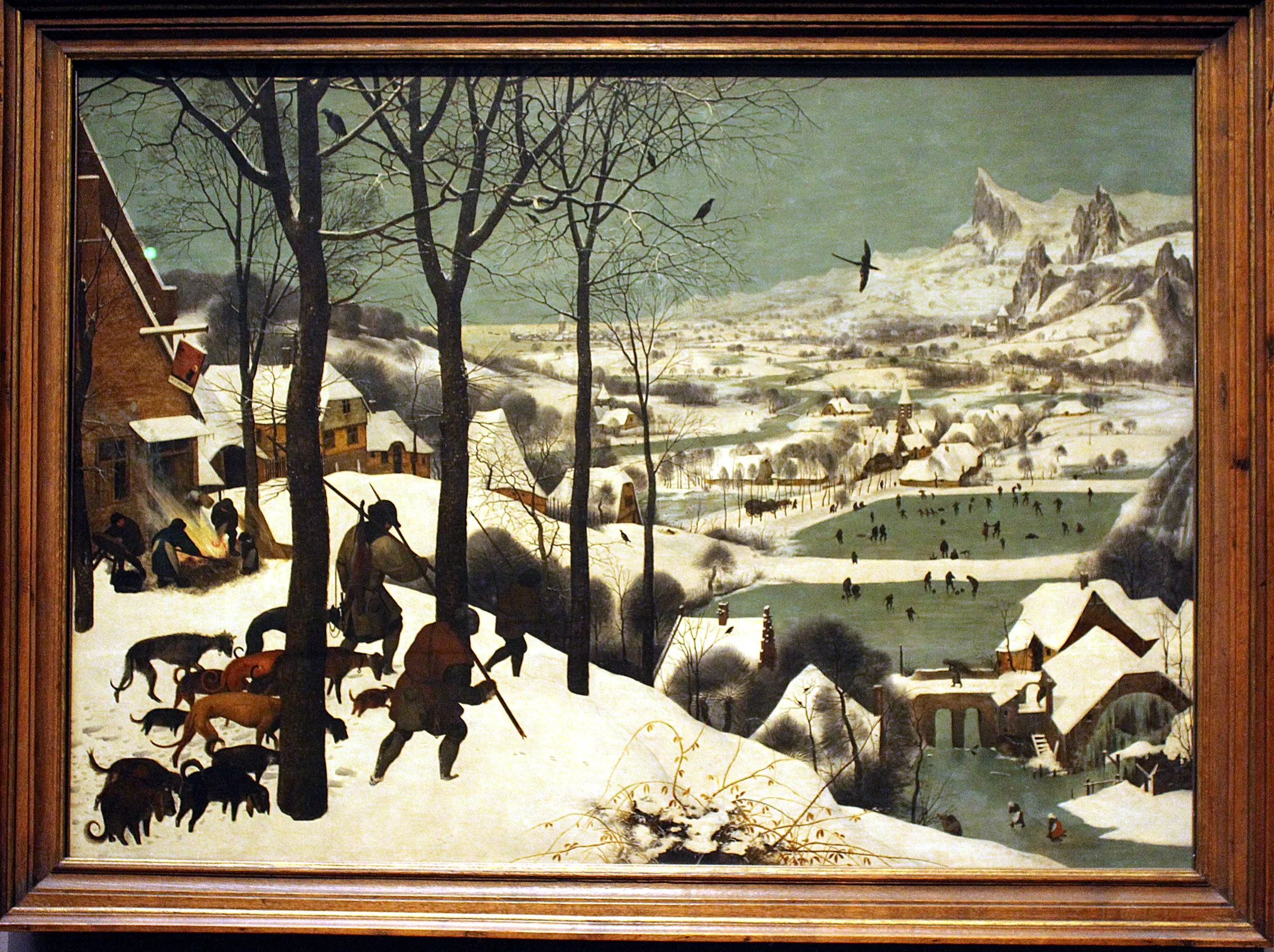
In the Bruegel rooms, time behaves differently. You approach for composition, then discover dozens of tiny narratives unfolding at the edges: skaters, hunters, smoke, weather, labor, prayer, and rumor.
Stand farther back than you expect for your first minute. Let the painting read as climate before it reads as story. Then move closer and notice how Bruegel distributes meaning across small incidents: a bent back, a turning head, a roofline, a patch of snow where no one stands. His genius is cumulative. The scene is never one event; it is social life unfolding in layers.
Three-step method
1) See the whole weather system
Is the painting cold, dusty, windy, ceremonial, threatening?
2) Track human movement
Where are people going? Who pauses? Who performs?
3) Read vertical hierarchy
Foreground action, middle-distance process, far-distance destiny.
What many visitors miss
- Bruegel's humor can be tender, not only satirical.
- Architecture often acts like a moral argument.
- Small animals are frequently narrative punctuation.
A Bruegel painting rewards patience more than speed.
| Work | First reaction | Deeper reading |
|---|---|---|
| Hunters in the Snow | Quiet winter scene | Social choreography of survival |
| Tower of Babel | Monumental construction | Fragility of human ambition |
| Procession to Calvary | Religious event | Crowd psychology and spectacle |
Slow-looking prompt set
Spend three full minutes on one corner of a canvas. Name what changes in your attention each minute. Most viewers notice that narrative emerges only after visual discipline: first shape, then gesture, then implication. That is exactly the Bruegel experience.
저자 소개

Vienna Museum Editorial Team
이 가이드는 짧게 스쳐 지나가기보다 맥락을 이해하며 깊이 있는 문화 경험을 원하는 여행자와 예술 애호가를 위해 작성되었습니다. 대표 걸작과 조용한 발견을 함께 즐길 수 있도록 실용성과 서사를 균형 있게 담았습니다.
Tags
Comments (0)
Loading comments...