20 Must-See Masterpieces at Kunsthistorisches Museum Vienna
Discover the most important artworks to prioritize at the Kunsthistorisches Museum in Vienna, with practical viewing tips and context.
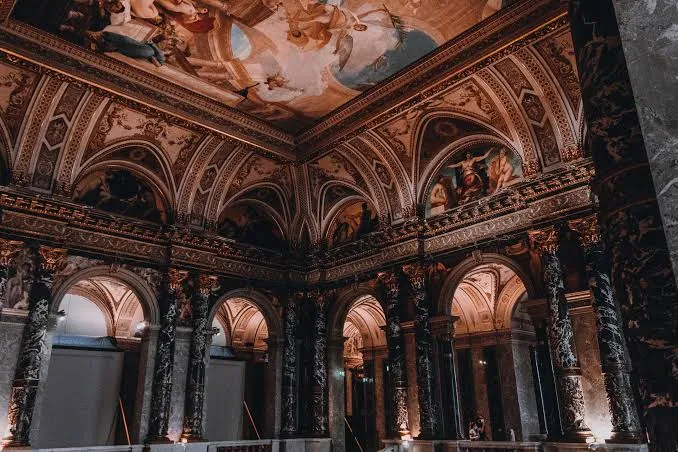
Some museum lists feel mechanical. This one is different: these 20 works create a story arc, from earthly labor and winter villages to imperial portraiture and mythological drama.
Instead of collecting checkmarks, imagine that you are following a cinematic sequence. Bruegel opens with distance and weather, Vermeer narrows the room and quiets the pulse, Rubens expands everything with motion and flesh, and the Kunstkammer turns scale inside out. By the end, your eye is more patient and your attention more precise.
Start with these anchors
- Bruegel: Hunters in the Snow
- Bruegel: The Tower of Babel
- Vermeer: The Art of Painting
- Rubens: The Four Continents
- Cellini: Saliera
Think in sequences, not isolated stops. One work sharpens your eye for the next.
How to read the rooms
- Spot light direction first.
- Find the emotional center next.
- Notice scale last; it changes everything.
Suggested pace table
| Room type | Suggested time | Why |
|---|---|---|
| Bruegel rooms | 35 min | Dense storytelling |
| High Baroque | 25 min | Movement and drama |
| Dutch painting | 20 min | Quiet precision |
| Kunstkammer objects | 30 min | Material wonder |
Narrative flow for your 20 picks
Move from collective scenes to individual presence. Start with paintings where whole communities appear, then continue to portraits where a single sitter dominates space, then end with objects made for intimate handling. This progression mirrors museum history itself: public story, private power, crafted detail.
Tiny challenge
- Choose one work that felt immediately accessible.
- Choose one work that felt difficult.
- Revisit the difficult one for 5 more minutes.
Why this works
Your first emotional reaction and your second informed reaction are often completely different. That second look is where museum memory begins. The gap between “I like this” and “I understand this” is the most rewarding space in any gallery.
关于作者

Vienna Museum Editorial Team
本指南写给希望“看得更深一点”的旅行者与文化爱好者。目标是帮助你在充分背景、稳定节奏与必要灵活性中,既看见馆内最著名的杰作,也不忽略那些安静却动人的发现。
Tags
Comments (0)
Loading comments...